Lake Hefner’s Role in Supplying Oklahoma City’s Municipal Water
Lake Hefner is often discussed as a source of Oklahoma City tap water, but a reservoir is only one part of a municipal supply system. Understanding its role means separating where source water comes from, where it is treated, and what residents can verify about water at home. Oklahoma City relies on a network, not a single lake or treatment plant.
Lake Hefner’s place in Oklahoma City’s water system
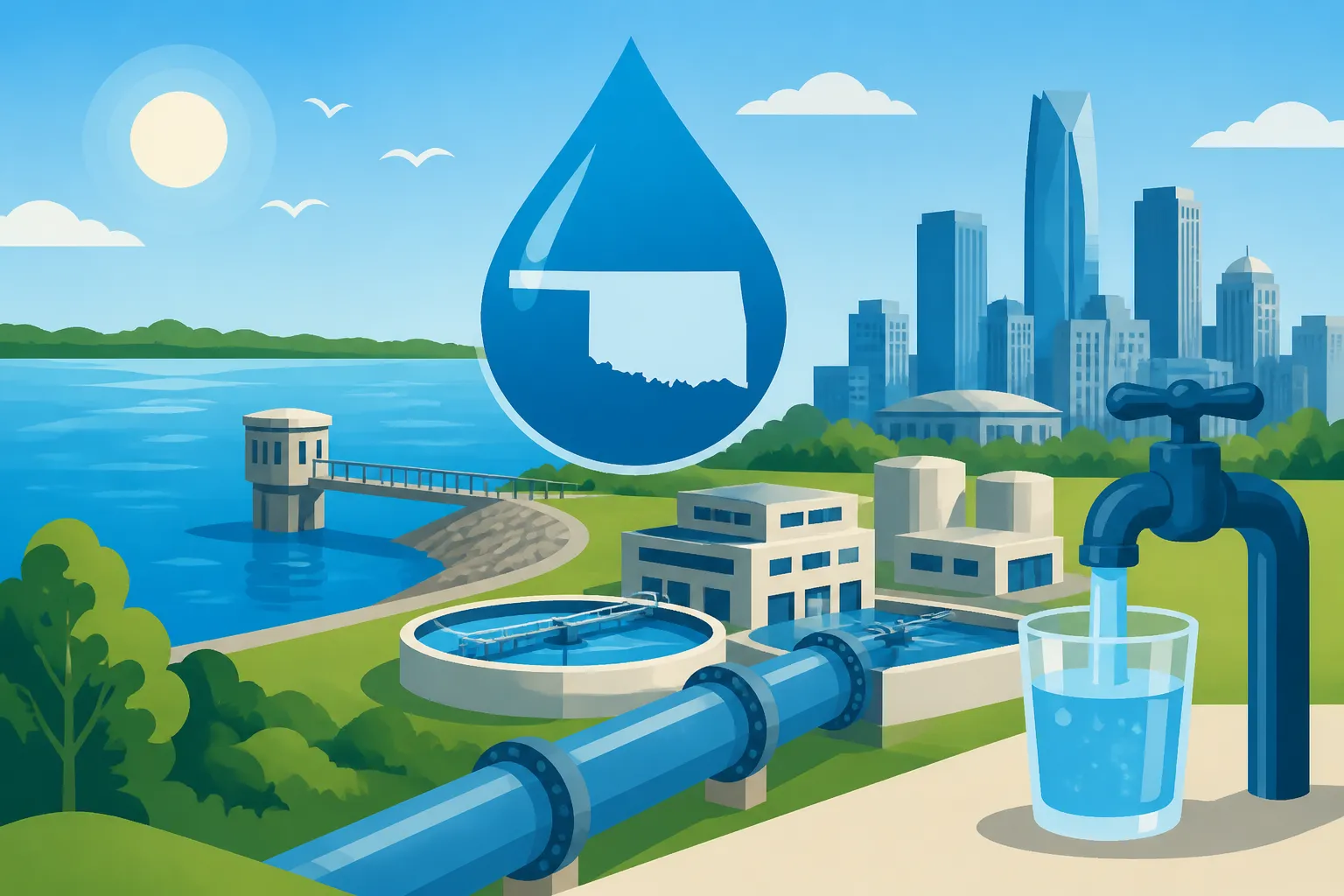
Lake Hefner matters because it is part of the source-water picture behind Oklahoma City’s municipal supply. According to the Oklahoma City Utilities Department, Oklahoma City’s drinking water comes from five surface reservoirs. The department also identifies two water treatment plants, Hefner and Draper. Those facts put Lake Hefner in a larger system of reservoirs and treatment facilities, rather than describing a city supplied by a single source.
The names can be confusing. Lake Hefner and the Hefner treatment plant share a name, but a reservoir and a treatment plant perform different jobs. A reservoir stores source water. A treatment plant processes water before it enters the distribution system. The shared name is useful when thinking about the system, but it does not, by itself, explain which water is routed to which plant, how much each source contributes, or how operations change over time.
That distinction is useful when reading about water quality, too. Reservoir water is source water; tap water has passed through treatment and distribution. A discussion of conditions in a lake should not be treated as a direct description of water at a household faucet. Likewise, a report about treated municipal water does not necessarily describe every condition in a reservoir.
For a broader overview of how a city’s sources and treatment fit together, see Oklahoma Municipal Tap Water: Sources, Treatment, and Safe Use. The comparison in Surface Water vs Groundwater: How Oklahoma Supplies City Taps can also help explain why surface reservoirs and groundwater sources involve different supply considerations.
The practical takeaway is that Lake Hefner is best understood as a part of Oklahoma City’s municipal source network. Its role is connected to the city’s overall supply and treatment arrangement, but the available system-level facts do not establish a detailed route from the lake to every tap. For that, residents need current utility information that identifies source-to-plant connections and operational arrangements.
From reservoir water to treated tap water
A municipal supply has several stages. Source water is collected or drawn from a supply source, treatment is applied at a plant, and treated water is conveyed through a distribution system to customers. This sequence is a useful way to understand Lake Hefner’s role without confusing the lake with the treatment process or the water that comes out of a home faucet.
At the source stage, a reservoir is part of the system’s available raw-water supply. Conditions in a surface reservoir can vary, and the water reaching a treatment plant may need processing to meet the system’s requirements. The specific treatment steps depend on the plant and the water being handled. The Oklahoma City Utilities Department identifies Hefner and Draper as the city’s two water treatment plants, but that fact alone does not describe each plant’s treatment sequence or specify which reservoir supplies which facility.
Treatment and distribution are different stages, too. Treatment takes place at a plant; distribution carries treated water toward customers. Once water is in the distribution system, the condition at an individual tap can also be affected by the building’s plumbing and fixtures. That is why a reservoir’s condition, a treatment plant’s output, a utility report, and a home’s tap result should not be treated as interchangeable evidence.
When trying to understand a specific route, look for information that explicitly connects a source reservoir with a treatment facility. A general description of the city’s system may identify the number of reservoirs and name the plants but not show routing, operating volumes, or how the system responds when conditions change. Do not infer those details from a facility’s name or from a broad overview.
For a system-wide explanation of how water can move among sources and plants, How Multi-Reservoir Networks Supply Raw Water to City Plants offers useful context. The article How Multi-Plant Municipal Systems Balance Drinking Water Treatment can help explain why a utility may operate more than one treatment facility without implying that each plant always operates in the same way.
This source-to-tap sequence also helps residents ask better questions. Instead of asking only whether Lake Hefner is “the water supply,” ask how it fits among the city’s surface reservoirs, which plant treats water from a particular source, and where to find current information about the finished water. Those are separate questions, and a reliable answer may require more than one utility document.
Why a reservoir network matters
A city served by multiple surface reservoirs has a source network rather than a single-source arrangement. The Oklahoma City Utilities Department’s description of five surface reservoirs makes that distinction clear. It gives residents an important high-level picture: the city’s drinking water supply is associated with multiple reservoirs, while treatment is identified at the Hefner and Draper plants.
The existence of a network does not reveal how the system is operated day to day. It does not say whether every reservoir contributes at the same rate, whether a particular source is used continuously, or whether the mix changes with conditions. Those details should come from current information issued by the utility, not from assumptions based on a lake’s visibility, its name, or its proximity to city neighborhoods.
A network can also make the word “source” less straightforward than it sounds. A resident may mean the lake where raw water originates, the plant that treats it, or the set of sources that support the municipal system. Those meanings are related but not identical. If a document says the city’s water comes from surface reservoirs, that describes the source category. If it names treatment plants, that identifies treatment locations. Neither statement alone tells a customer the exact origin of the water flowing from a particular tap at a particular moment.
This is why broad system descriptions and local water quality reports serve different purposes. A system overview helps explain the general supply structure. A water quality report summarizes information about the utility’s treated water and monitoring. A service-line disclosure or home plumbing inspection addresses a different question: what materials water passes through near a specific property. To understand what a report can and cannot say about a household faucet, read Does a Utility Water Quality Report Reflect Your Home Tap?.
The network perspective is also useful when residents notice a change in taste or smell. A change may be associated with source-water conditions, treatment adjustments, distribution conditions, or plumbing inside a building. A change by itself does not identify which stage is responsible. Seasonal Taste, Odor, and Disinfection Changes in Oklahoma Tap Water explains why perceptions can shift without making a reservoir the only possible explanation.
In short, Lake Hefner’s significance is best considered alongside the rest of the source system and the treatment facilities. The reservoir is part of a broader municipal water picture; it should not be used as a shortcut for judging the quality of treated water or predicting the precise source of water at an individual address.
What residents can verify about Lake Hefner and tap water
Residents can use official utility information to separate what is documented from what is simply assumed. Start with a current overview from the Oklahoma City Utilities Department. Confirm that it describes the source reservoirs and treatment plants, and check whether it includes a map, a source-to-plant explanation, or operational details relevant to the question being asked. A general statement about the system may not include all of those details.
For drinking-water quality, consult the city’s current consumer information and annual report. A water quality report is useful for understanding the utility’s reported results and the context it provides about treated water. It is not a substitute for a home-specific plumbing assessment, nor does it necessarily answer questions about the current condition of Lake Hefner. For help finding and interpreting report information, see Understanding Your Oklahoma Drinking Water Quality Report and Finding Metro Water Quality Reports and Service-Line Disclosures.
Keep the question specific. If the concern is about the lake, look for source-water information. If the concern is about treatment, ask which plant or treatment process is relevant. If the concern is a result reported for municipal drinking water, read the report’s sampling and reporting context. If the concern is an individual faucet, consider the home’s plumbing as well as utility-wide information.
A useful set of questions for the utility might include:
- Which reservoirs are currently listed as sources for Oklahoma City’s drinking water?
- Does the utility publish information that connects Lake Hefner with a treatment plant?
- Where can customers find the current water quality report and any source-water updates?
- Does the report describe finished water, source water, or both?
- What steps should a customer take if a household tap has a persistent unusual taste, odor, color, or film?
These questions are more productive than assuming that every supply detail is included in a single report. If an answer depends on the system’s current operation, ask the utility for current information rather than relying on an older summary or an informal account.
For a sudden household change, avoid drawing conclusions from appearance or smell alone. Compare the issue across taps, note when it began, and contact the utility using current contact details on its official website if the issue may involve municipal service. The steps in Sudden Odor, Strange Taste, or Film in City Water: Practical Steps can help organize what to check. If a concern seems specific to indoor plumbing, a qualified plumbing professional may help identify the relevant fixture or piping.
Reading Lake Hefner’s role without overinterpreting it
It is tempting to turn the phrase “water comes from Lake Hefner” into a complete account of municipal water. In practice, that phrase can leave several important questions unanswered. It may identify a source, but it does not necessarily explain how water is treated, how the source fits with the city’s other reservoirs, or whether a particular home receives water associated with that source at a given time.
The reverse assumption is also risky: because the city identifies two plants, a resident should not conclude that each plant serves a fixed, separate part of the city unless the utility says so. Plant names and reservoir names do not provide a service-area map. A city may describe facilities at a high level without publishing detailed routing in the same document.
Think of the facts as different layers:
| System detail | What it helps explain | What it does not establish by itself |
|---|---|---|
| Surface reservoirs | The broad category and network of source water | The current contribution or routing of each reservoir |
| Lake Hefner | A reservoir’s place in the city’s source-water discussion | The exact path from the lake to a specific home |
| Hefner and Draper treatment plants | The treatment facilities identified by the utility | Each plant’s current operating role or service area |
| Water quality report | Reported information about municipal drinking water | Conditions at every home tap or inside household plumbing |
| Household tap observation | What a customer notices at a particular fixture | The cause of a taste, odor, appearance, or other change |
The table is not a substitute for current utility documentation. Its purpose is to prevent one type of information from being asked to answer a different question. For example, a water quality report may be the right place to begin when asking about reported municipal-water results, but a plumbing evaluation may be more relevant when the concern appears limited to a fixture.
A sensible way to read any statement about Lake Hefner is to identify its scope. Does it discuss source water, treatment, distribution, or a customer’s tap? Does it describe the whole municipal system or a particular facility? Does it provide current operational details, or only a general overview? Those distinctions help residents avoid both unnecessary alarm and unjustified reassurance.
Oklahoma City’s system-level facts are useful: the Oklahoma City Utilities Department says drinking water comes from five surface reservoirs and identifies two water treatment plants, Hefner and Draper. Beyond that overview, residents should look for current utility documentation when they need details about routing, individual sources, or current operations. For plumbing-related questions, the article Which Part of the Water Service Line Is the Homeowner’s? explains why the public supply and the pipes serving a property are separate parts of the picture.
Frequently Asked Questions
Does Oklahoma City get all its drinking water from Lake Hefner?
No. According to the Oklahoma City Utilities Department, Oklahoma City’s drinking water comes from five surface reservoirs. Lake Hefner is part of the broader source-water discussion, not the only source named by the city.
Are Lake Hefner and the Hefner treatment plant the same thing?
No. Lake Hefner is a reservoir, while the Hefner treatment plant is a water treatment facility. The shared name does not explain the exact routing between a source and a plant.
Does the name of a treatment plant show which neighborhoods it serves?
Not by itself. A plant name does not establish a service-area boundary or tell residents which source water reaches a particular address. Check current utility information for those details.
Does a report about city drinking water tell me the condition of water at my faucet?
Not necessarily. Utility reports provide system-level information, while household plumbing can affect water at a particular tap. Use the report for its stated scope and seek property-specific help when appropriate.
Sources
- Oklahoma City Utilities Department — CCR June 2026 FOR 2025 Reporting 063026CB PUBLISHEDV2071426 (PDF) (checked November 14, 2026)
Disclaimer
This article is for general informational purposes only and does not constitute professional advice. Laws, prices and regulations vary by location and change over time. Consult a qualified professional for guidance on your specific situation. Oklahoma Water Guide is not a government agency or water utility and is not affiliated with any public water system.