How Canton Lake Water Travels Down the North Canadian River
Canton Lake can seem far removed from a kitchen tap, but its water can travel downstream through the North Canadian River before entering a municipal supply system. The key is that this is a river-and-reservoir route, not a pipe running directly from the lake to homes. Here’s how releases, downstream capture, treatment, and local conditions fit together.
The route begins at Canton Lake
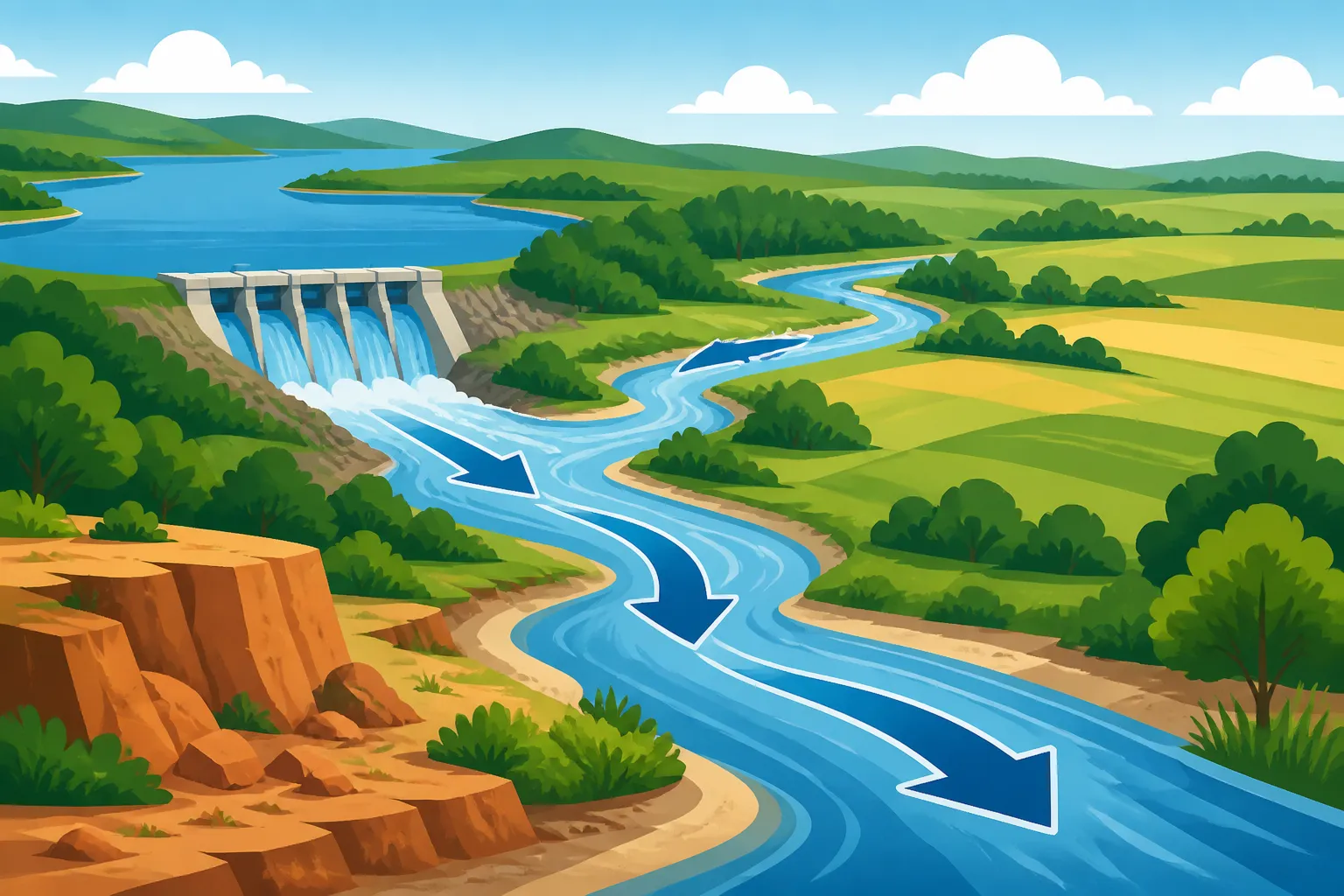
Canton Lake is a reservoir on the North Canadian River in western Oklahoma. Its dam holds water that can be released into the river channel downstream. From there, the water moves generally southeast toward the Oklahoma City area, following the North Canadian River rather than a dedicated pipeline from the lake.
That distinction matters. A direct pipeline would carry water along a defined route, with the utility controlling when it enters the system. A river route is more dependent on reservoir releases, river conditions, downstream storage, and the ability to capture water at a suitable point. The lake is an upstream source; it is not a tap-water treatment plant.
Canton Lake also has more than one purpose. Reservoir operations must account for flood management as well as water supply and other uses. The amount and timing of water released can therefore depend on conditions at the lake and along the river. A release does not mean that every gallon is reserved for a particular city or will reach a drinking-water intake.
The broad sequence is:
- Water is stored behind Canton Dam.
- A release sends water into the North Canadian River below the dam.
- The water travels downstream through the river system.
- A downstream reservoir or intake may capture some of it for municipal use.
- Raw water is treated before being sent through a distribution system to customers.
The path from source to tap is therefore a chain of connected operations, not a single transfer. To understand how the route fits into the state’s wider supply network, see How Multi-Reservoir Networks Supply Municipal Drinking Water Systems and Surface Water vs Groundwater: How Oklahoma Supplies City Taps.
What happens as water travels downstream
Once released, water moves through a natural river channel. It is not enclosed, and the journey is not mechanically controlled in the same way as water inside a pipeline. River flow, weather, and conditions in the channel all influence how water moves and how much is available farther downstream.
Some released water may be temporarily stored or mixed with water already in the river. Some may be withdrawn for other uses, soak into the ground, or be lost to evaporation. Rainfall and runoff can add water along the way. These processes mean that the volume released at Canton Dam and the volume available at a downstream intake are not necessarily identical.
Travel time also varies. It depends on factors such as the amount and timing of a release, river flow, and water levels in downstream storage. Without current operating and flow data, it is not possible to give a reliable travel time for a particular release. A map can show the general direction of travel, but it cannot tell you when a specific parcel of water will reach a reservoir or intake.
The river’s natural role also means that raw water can change as it moves. Temperature, sediment, organic material, and substances carried by runoff may vary with conditions. That does not mean the water is automatically unsuitable for treatment. It means the receiving water system needs to manage the source it has, monitor it, and use treatment processes suited to raw-water conditions.
This is one reason a river route should not be described as water flowing unchanged from the lake into a household. A downstream water body may contain water from several sources, and the proportions can change over time. The supply picture is better understood as a network of storage, river reaches, and treatment facilities. How Rivers and Storage Basins Route Raw Water to Distant Cities explains that broader pattern.
Where downstream water can be captured
For water to become part of a municipal supply, it must be captured at a place where a public water system can take it in. In the Oklahoma City area, Lake Overholser is an important downstream storage point associated with the North Canadian River route. Water reaching the area may be stored or mixed there before it is withdrawn for treatment, subject to system operations and available supply.
Capture is not automatic. A release from Canton does not guarantee that a particular amount will enter a drinking-water system. The amount that can be captured depends on river and reservoir conditions, operational decisions, and the system’s ability to take and treat water. Water that continues downstream or remains in storage is not necessarily part of the immediate municipal supply.
It is also important to distinguish between a source reservoir, a receiving reservoir, and a treatment plant:
| Part of the route | What it does | What it does not mean |
|---|---|---|
| Canton Lake | Stores water and can release it into the North Canadian River | It does not treat water for household use |
| North Canadian River | Carries released water downstream and may receive other flows along the way | It is not a closed, dedicated supply pipe |
| Downstream storage or intake | Captures or withdraws water for possible municipal use | It does not ensure every release is captured |
| Treatment plant | Processes raw water to meet applicable drinking-water requirements | It is not the same thing as the reservoir or river |
| Distribution system | Moves treated water through mains to service connections | It does not reveal the precise source of every gallon at a home |
A municipal system may use more than one source and may adjust operations as conditions change. As a result, Canton Lake water can be part of a larger supply without being the only source feeding a treatment plant or community. How Multi-Plant Municipal Systems Balance Drinking Water Treatment describes why systems may shift among facilities and sources.
The downstream route is also different from a long-distance water pipeline. Pipelines can move raw water or treated water between reservoirs, plants, and service areas, but the Canton-to-downstream part of this route is through the river. Other parts of a regional network may use pipes, pumps, or additional reservoirs. For another example of a pipeline-based connection in Oklahoma, see The 100-Mile Atoka Pipeline: Moving Water to Stanley Draper Reservoir.
How raw water becomes treated tap water
Water captured from a river or reservoir is raw water. Before it can be distributed as drinking water, a public water system sends it through a treatment process designed for the source and the conditions at the time. Treatment commonly involves steps such as removing suspended particles and disinfecting the water. The precise process and operating details depend on the facility.
Treatment is not simply a matter of passing water through one filter. Operators manage multiple steps and monitor water quality through the plant and distribution system. Surface-water sources can vary, so treatment may need to respond to shifts in turbidity, organic material, temperature, or other characteristics. The aim is to produce water that meets applicable requirements before it enters public distribution.
After treatment, water may be stored and moved through pipes, pumps, and water towers before reaching homes and businesses. By then, it has passed through several parts of the supply system. This is why an upstream lake name alone cannot tell a customer exactly what is coming from a particular faucet at a particular time. Oklahoma Municipal Tap Water: Sources, Treatment, and Safe Use provides more context on the steps between source water and household taps.
A community’s annual water quality report is useful for understanding the finished water and the monitoring reported for that system. It generally describes the system’s water quality over a reporting period, rather than tracking individual drops from Canton Lake to a specific address. The report may identify water sources and summarize testing, but it is not a day-by-day record of which reservoir supplied a home. For help interpreting that information, see Understanding Your Oklahoma Drinking Water Quality Report.
If the question is whether a local utility uses Canton Lake water, check the utility’s current source information and annual report. The connection can depend on the service area and operating conditions, so a general description of the regional route cannot establish the source for every customer.
What can change the route or amount available
The river route has several points where conditions can affect the amount and timing of water available downstream. Reservoir releases are one part of the picture, but they are not the only one.
- Reservoir conditions: The amount stored at Canton Lake and the operating needs of the reservoir can affect release decisions.
- River flow: Water already in the North Canadian River can add to or change the flow moving downstream.
- Weather: Rainfall and runoff can alter river conditions, while dry periods can reduce the water available in the channel.
- Losses and withdrawals: Water can be lost through evaporation or seepage, or withdrawn for uses along the way.
- Downstream storage: A receiving reservoir’s capacity and operating conditions affect how much water can be held or made available for treatment.
- Utility demand and plant operations: A water provider may manage several sources and treatment facilities to meet changing needs.
These factors help explain why the route is not a fixed, gallon-for-gallon transfer. A release from Canton is part of a managed water system, but what happens downstream depends on the whole river and reservoir network.
They also explain why a source description should not be used as a substitute for current local information. For current supply conditions, customers should consult their water provider’s official website or notices. For quality questions, start with the provider’s current water quality report and any current advisories. A regional route can explain where water may come from, but it cannot confirm the status of a specific tap or replace instructions issued by a utility.
What this route means for customers
For customers, the most useful takeaway is that Canton Lake is an upstream source that can contribute water through the North Canadian River route. The water must still be captured downstream, treated, and distributed. River travel does not mean untreated lake water goes directly to homes, and a release does not prove that every customer receives water from Canton Lake.
If you are trying to identify your own source, begin with the service area and water provider listed on your bill, then check the provider’s official source information and annual report. A regional overview may describe the route, while the utility can explain which sources serve its system and how those sources are operated. If you want to understand the report itself, Finding and Reviewing Your Community Annual Water Quality Report offers practical next steps.
If you are investigating a taste, odor, or appearance change, do not assume Canton Lake is the cause just because it is connected to the regional supply. Conditions can change at the source, during treatment, or in distribution and household plumbing. Follow the utility’s current instructions and report persistent or sudden changes through its official contact channels. For troubleshooting, see Sudden Odor, Strange Taste, or Film in City Water: Practical Steps.
The Canton route is best pictured as a sequence: storage at the lake, release into the river, downstream movement, capture where the system can use the water, treatment, and distribution. Each step has its own operating limits and monitoring. Understanding that sequence makes it easier to distinguish the origin of raw water from the quality and delivery of finished tap water.
Frequently Asked Questions
Does Canton Lake water flow directly to Oklahoma City homes?
No. Water released from Canton Lake travels in the North Canadian River and may be captured downstream for municipal use. It must be treated and distributed before reaching customers.
Does every release from Canton Lake become drinking water?
No. Some released water may not be captured for municipal supply. River conditions, withdrawals, storage, and system operations affect how much water is available downstream.
Is the North Canadian River a pipeline from Canton Lake?
No. It is a natural river channel. Water can also mix with other flows and be affected by conditions along the route.
How can I tell whether my water provider uses Canton Lake?
Check the provider’s official source information and annual water quality report. The route alone does not establish which sources serve a particular address or when they are used.
Disclaimer
This article is for general informational purposes only and does not constitute professional advice. Laws, prices and regulations vary by location and change over time. Consult a qualified professional for guidance on your specific situation. Oklahoma Water Guide is not a government agency or water utility and is not affiliated with any public water system.